

Growing Ranunculus
Ranunculus asiaticus
These dreamy, petal abundant flowers win the hearts of most everyone. Their colors range from vibrant to pastel and give us so many options for spring color when we need it most after the long cold winter.
The name Ranunculus means ‘little frog’ in Latin. Many species grow in moist areas and stream banks where frogs live. They are native to Greece and Southwest Asia and tend to grow well in Mediterranean climates that lack temperature extremes.
There are many series and cultivars of Ranunculus, also known as the Persian Buttercup.
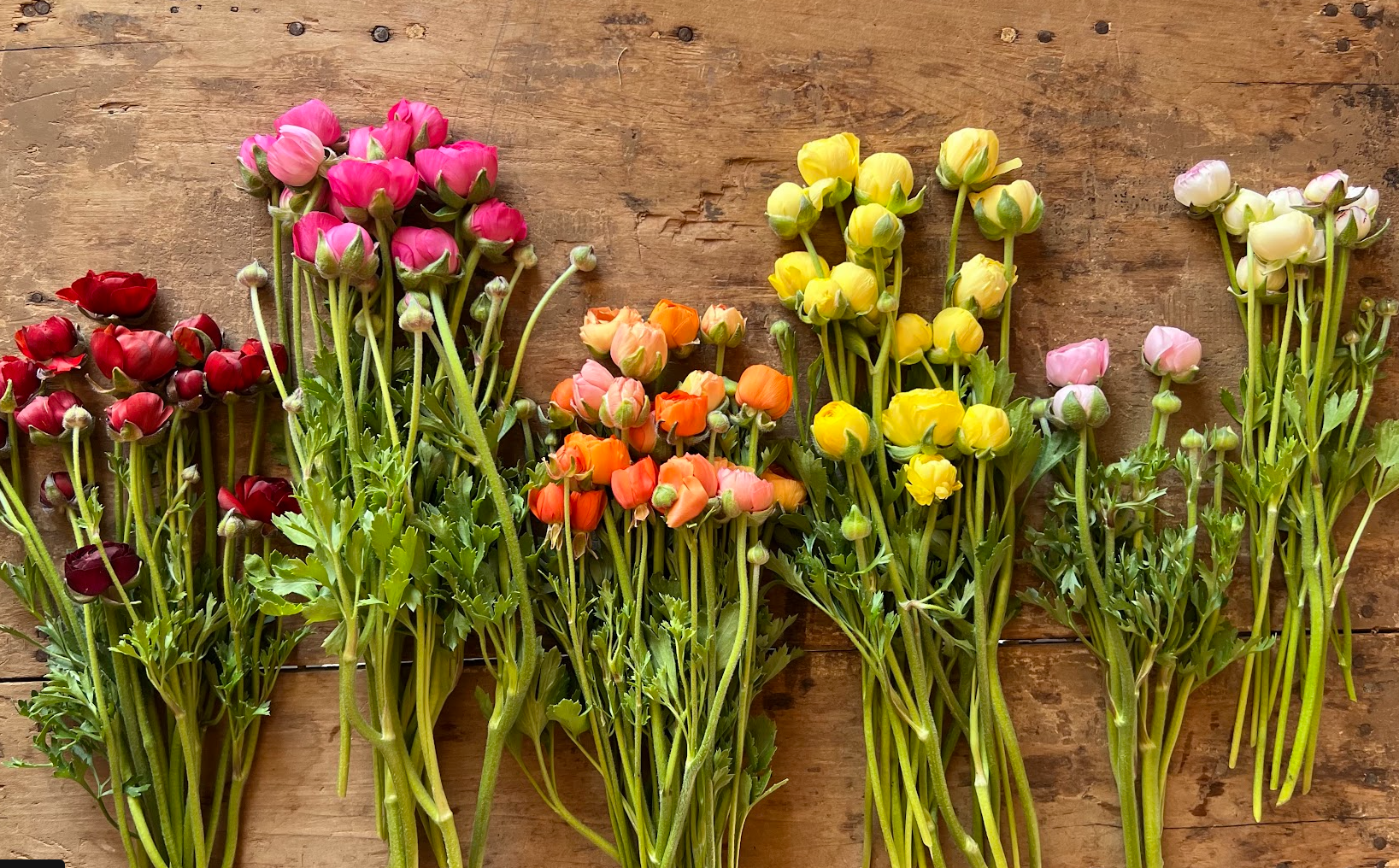
Ranunculus plants are hardy to zones 8-10 yet are generally grown as annuals.
As stated, Ranunculus perform best in areas with mild temperature shifts but that doesn’t mean they can’t be grown in other areas. It just takes a little tweaking and understanding of what they need. Growing in a zone like ours, Zone 4b/5a, can be challenging due to our typically short spring season. For our area, Ranunculus are a late spring crop, blooming in May.
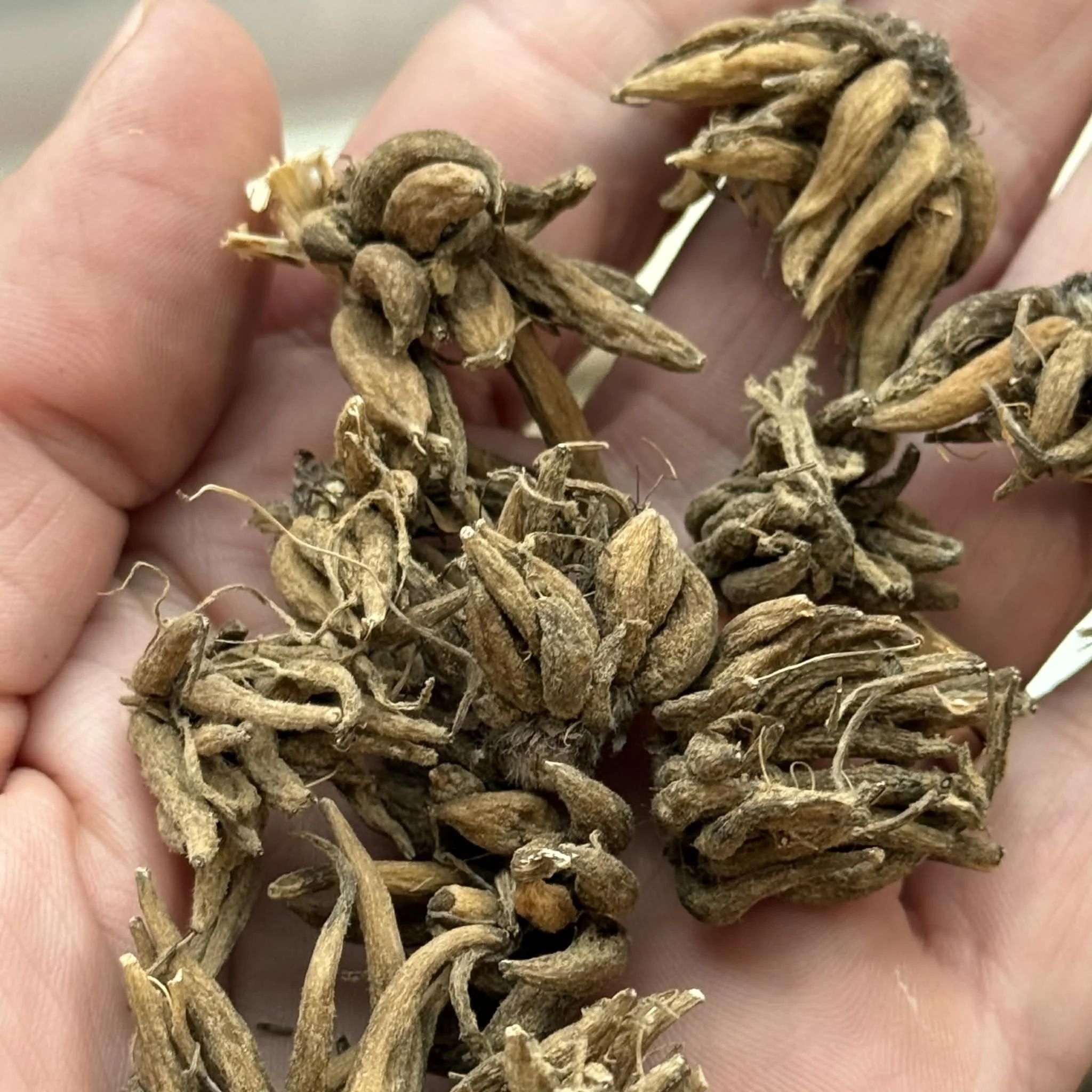
While Ranunculus can be grown from seed, typically they are grown from a tuberous root called a corm with many tentacle like root structures. These corms are obtained in a dry, dormant state and must be rehydrated to grow new roots and shoots.
Place dormant tubers in running tap water for 2-12 hours. They will swell and double in size. It’s often recommended to then submerse them in a fungicide to help prevent rot as they begin to sprout.
Growers tend to have different methods to presprout Ranunculus.
At our farm, we generally place the rehydrated corms, tentacle side down in a tray of potting mix and cover them with about 1” more of potting mix. We then moisten the planted tray slightly and cover with another tray to shield out any light. Take care not to overwater. Rot is a common issue for Ranunculus.
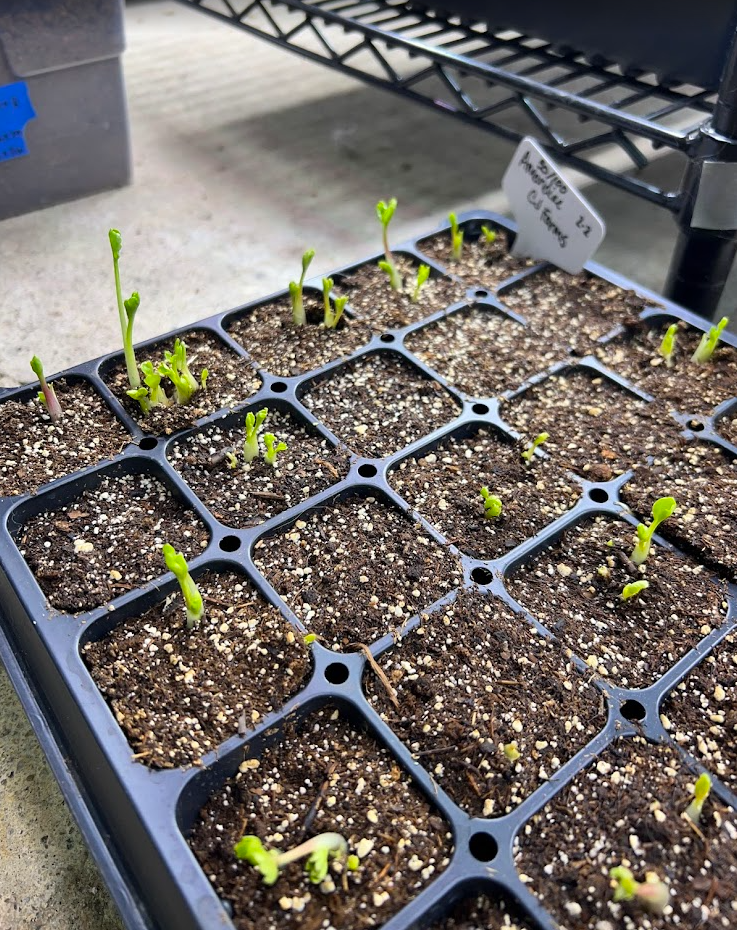
The trays of Ranunculus will sit, unbothered, in a cool location approx. 40-50 degrees F for 2-3 weeks.
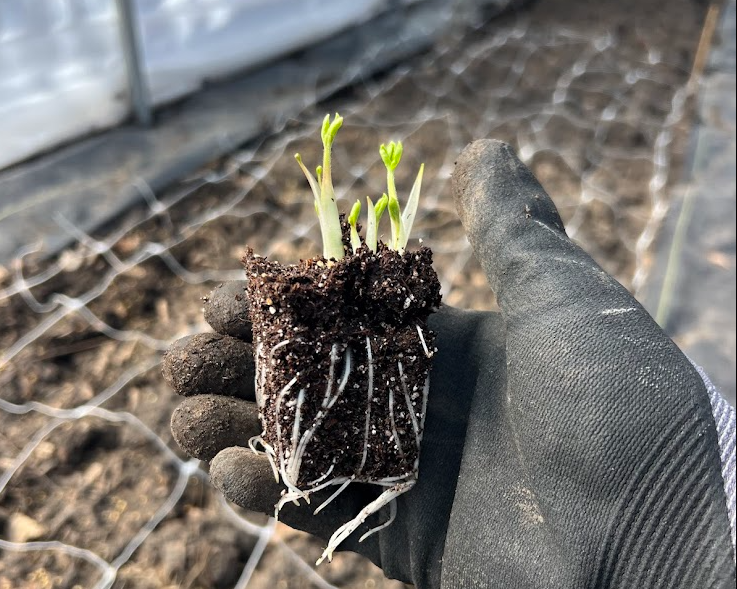
Once new roots and possibly shoots have formed, the
y can either be planted outside or continue to grow under lights indoors keeping temps on the cool side until they can be planted outside.
Discard any ‘duds’ to prevent disease from rot.
Plant presprouted corms 1-2” deep and 4-8” apart. Keeping in mind that the larger the corm, the more space it will need as rot can easily threaten their survival. It’s always better to be more conservative with spacing.
Ranunculus will typically bloom 3 months after planted and continue to bloom for 1 month. Rising temperatures and increased daylength tend to cease flowering. Once soil temperatures consistently reach 70 degrees F, corms will go dormant. Timing is key when it comes to growing and blooming.
In our zone, late winter/early spring temperatures can fluctuate dramatically. It’s always a good idea to have frost cloth on hand to protect the sprouted corms from extreme temps. Ranunculus can generally tolerate temperatures down to 29 degrees F but will freeze lower than that. Ideal growing temperatures are 40-45 degrees at night at 68 degrees during the daytime.
As with many flowers, Ranunculus produce several stems per plant. The more you harvest, the more blooms will be produced.
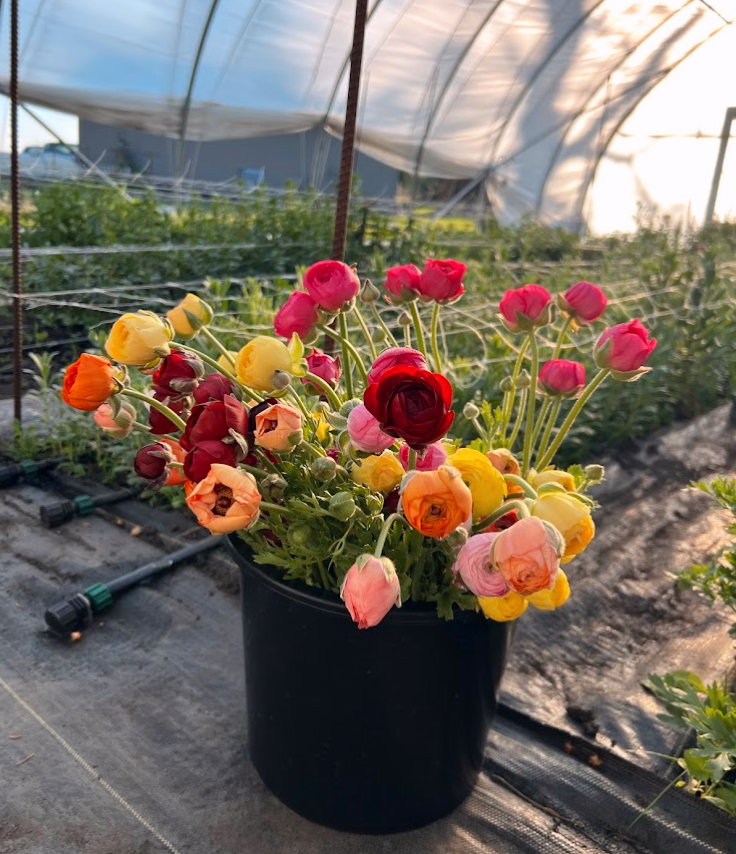
Ranunculus have a generous vase life of 10-14 days when harvested at the proper time.
Blooms open with daylight and close at night. For best quality, allow them to open and close once or twice before harvesting. When ready, the bud will have some give to it when gently squeezed. We call this the marshmallow stage. The sepals are loose, and the outer petals will have pulled away from the flower head as well.
Cut to the base of the plant. There are usually side buds that you can remove or leave for visual interest if desired, but they will not bloom. The main bloom will continue to open after harvest.
Note: Anemones are often grown along side of Ranunculus and require the same germinating and growing conditions as stated here. Anemones take a bit longer to put out roots and sprout.
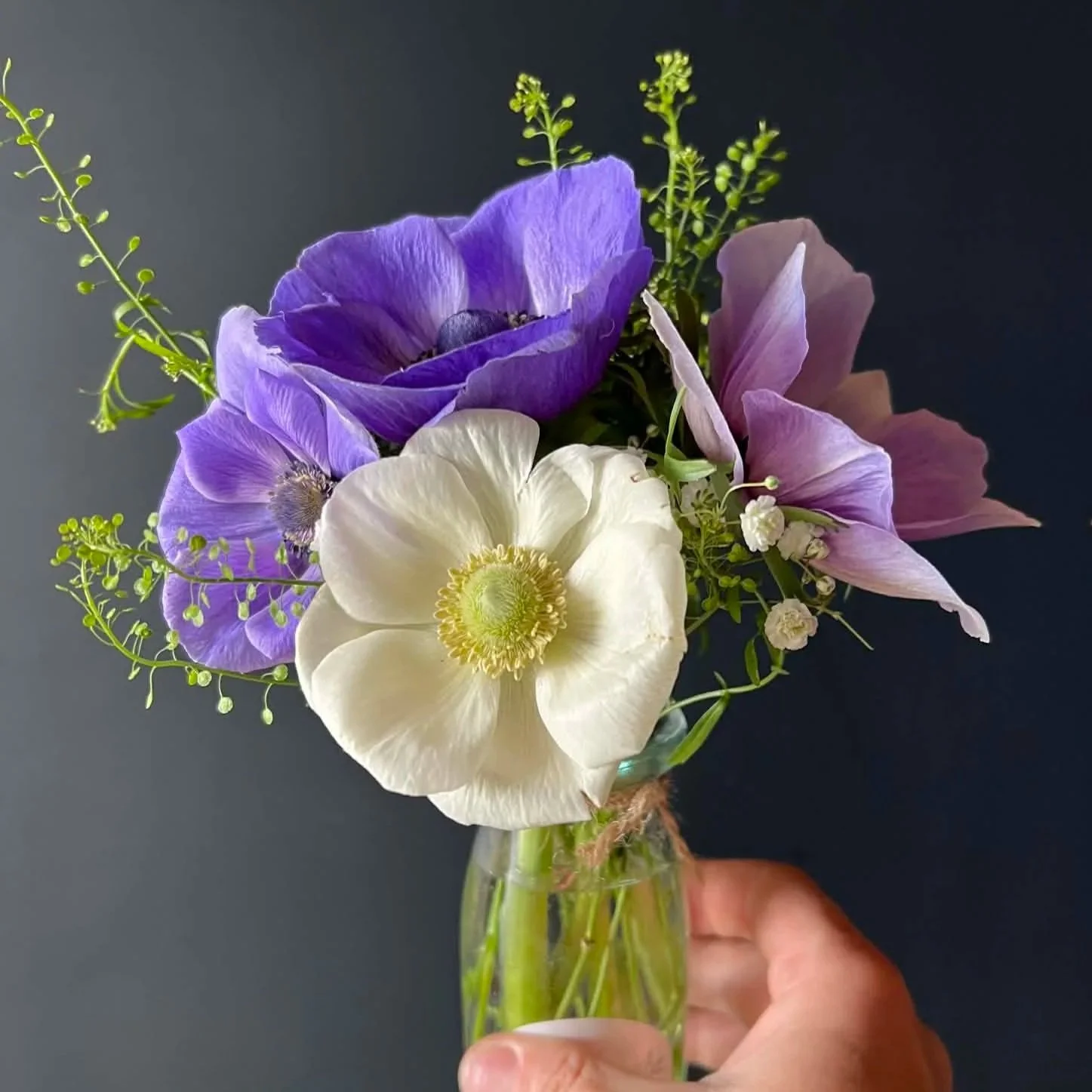
Anemone bouquet
We hope you find the video below helpful as you grow your own Ranunculus and Anemone blooms.
